Principles of Thermodynamics is Gtu Reference book for B.tech Mechanical Branch Students in Engineering Second Year by Jean-Philippe Ansermet and Sylvain D. Brechet.
In this introductory textbook, thermodynamics is presented as a natural extension of mechanics, so that the laws and concepts learned in mechanics serve to get acquainted with the theory. The foundations of thermodynamics are presented in the first part. The second part covers a wide range of applications, which are of central importance in the fields of physics, chemistry and engineering, including calorimetry, phase transitions, heat engines and chemical reactions. In the third part, devoted to continuous media, Fourier and Fick’s laws, diffusion equations and many transport effects are derived using a unified approach. Each chapter concludes with a selection of worked examples and several exercises, to reinforce key concepts under discussion. A full solutions manual is available at the end of the book. It contains more than 150 problems based on contemporary issues faced by scientists and engineers that are solved in detail for undergraduate and graduate students.
Principles of Thermodynamics Contents
Part I Foundations
Thermodynamic System and First Law
Entropy and Second Law
Thermodynamics of Subsystems
Thermodynamic Potentials
Part II Phenomenology
Calorimetry
Phase Transitions
Heat Engines
Chemistry and Electrochemistry
Part III Continuous Media
Matter and Electromagnetic Fields
Thermodynamics of Continuous Media
Thermodynamics of Irreversible Processes
Part IV Exercises and Solutions
Thermodynamic System and First Law
Entropy and Second Law
Thermodynamics of Subsystems
Thermodynamic Potentials
Calorimetry
Phase Transitions
Heat Engines
Chemistry and Electrochemistry
Matter and Electromagnetic Fields
Thermodynamics of Continuous Media
Thermodynamics of Irreversible Processes
Thermodynamics is a theory that establishes the relationship between the physical quantities that characterize the macroscopic properties of a system. In this textbook, thermodynamics is presented as a physical theory which is based upon two fundamental laws pertaining to energy and entropy, which can be applied to many different systems in chemistry and physics, including transport phenomena.
By asserting that energy and entropy are state functions, we eliminate the need to master the physical significance of differentials.
Thus, thermodynamics becomes accessible to anyone with an elementary mathematical background.
As the notion of entropy is introduced early on, it is readily possible to analyse out-of-equilibrium processes taking place in systems composed of simple blocks.
Students engaging with thermodynamics have the opportunity to discover a broad range of phenomena. However, they are faced with a challenge.
Unlike Newtonian mechanics where forces are the cause of acceleration, the mathematical formalism of thermodynamics does not present an explicit link between cause and effect.
Nowadays, it is customary to introduce temperature by referring to molecular agitation and entropy by invoking Boltzmann’s formula. However, in this book, the intrusion of notions of statistical physics is deliberately avoided.
It is important to start off by teaching students the meaning of a physical theory and to show them clearly the very large preliminary conceptual work that establishes the notions and presuppositions of this theory.
Punctual references to notions of statistical physics, which are not formally presented, give the impression that in science the results from another theoretical body of knowledge can be borrowed without precaution.
By doing so, students might not perceive thermodynamics as a genuinely scientific approach. It is clear that the introduction of entropy with a mathematical formula is somewhat reassuring. However, it is by performing calculations of entropy changes in simple thermal processes that students become familiar with this notion and not by contemplating a formula that is not used in the framework of thermodynamics.
This book is broken up into four parts. The first part of the book gathers the formal tools of thermodynamics, such as the thermodynamic potentials and Maxwell relations.
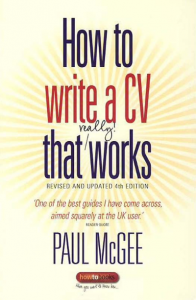
There are not many certainties in life – death and taxes are probably the main ones. Now there is another. At some time, we are all likely to need a Curriculum Vitae, or CV for short.
Whether we’re leaving school or college, wanting a career change, experiencing redundancy or returning from a career break, our first priority is to get a CV written.
Not only is a CV necessary for the benefit of the intended reader, but as this book will illustrate, compiling one can provide a great insight for you personally.
Rather than relying on someone who doesn’t know you to write your ‘personal sales brochure’, this book gives you a practical step-by-step approach to creating your own.
I hope for once you will value your Dad’s advice! Finally, I hope this book contributes in some way to the future success of all its readers. Good luck.
Download Free PDF Book : How to Write a CV That Really Works by Paul Mcgee
To get the job you want you need a CV that really does the job. This practical, bestselling book will show you exactly how to present your skills, identify your achievements and communicate these successfully. You will learn to focus on your strengths and find out which skills to highlight for which kind of job. The author suggests different styles and uses for a CV, showing how to get the most from your most powerful marketing tool, whatever your background or current situation. And you will find invaluable advice on what to do once you’ve got an interview.
How to Write a CV That Really Works: A Concise, Thorough and Comprehensive Guide to Writing an Effective Resume PDF
A true story about why we sabotage ourselves, feel overwhelmed, set aside our dreams, and lack the courage to simply be ourselves. . . and how to start choosing happiness again!
Table Of Contents :
Session One
Chapter 1: Resistance
Chapter 2: Your Quest for Happiness
Chapter 3: Making Sense of Everything
Chapter 4: Resisting God
Chapter 5: Life Is Messy
Chapter 6: Something Is Missing
Session Two
Chapter 7: The Big Question
Chapter 8: Four Words
Chapter 9: Are You Spiritually Healthy?
Chapter 10: Get Busy Living
Chapter 11: Ordinary Things
Chapter 12: Living Soulfully
Session Three
Chapter 13: Hour by Hour
Chapter 14: Interesting People
Chapter 15: Falling in Love
Chapter 16: No Visitors
Chapter 17: An Unconventional Education
Chapter 18: Tuesday Nights
Session Four
Chapter 19: Bored?
Chapter 20: Learning to Listen
Chapter 21: The Power of Habits
Chapter 22: How Many Sundays Left?
Chapter 23: Attempted Murder
Chapter 24: Hungry
Session Five
Chapter 25: Breaking the Cycle
Chapter 26: You Cannot Succeed at Anything Without
Chapter 27: The Secret to Excellence
Chapter 28: The Light Is On
Chapter 29: Are You a Pilgrim or a Tourist?
Chapter 30: The First Intervention
Session Six
Chapter 31: A Weekend Away
Chapter 32: Let Your Light Shine
Chapter 33: Made for Mission
Chapter 34: When God Looks at a Résumè
Chapter 35: Don’t Let the Critics Win
Chapter 36: Blessed and Grateful
Chapter 37: Never Get Discouraged
Download Free PDF Book : Resisting Happiness Study Guide by Matthew Kelly
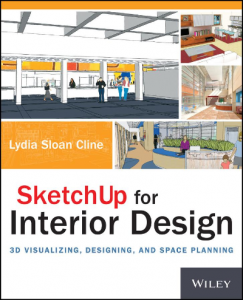
SketchUp for Interior Design 3D Visualizing Designing and Space Planning
Book Description:
A practical guide to SketchUp addressing the specific needs of interior designers
Already a common and popular tool for architects and landscape architects, SketchUp is increasingly finding a place in the professional workflow of interior designers. SketchUp for Interior Design is a practical introduction for interior designers and students who want to learn to use the software for their unique needs. The book covers the basics of creating 3D models before showing how to create space plans, model furniture, cabinetry, and accessories, experiment with colors and materials, incorporate manufacturers’ models into project plans, and create final presentations and animated walk-throughs for clients. Each chapter includes clear explanations and helpful illustrations to make this an ideal introduction to the topic.
Includes downloadable sample models and 39 tutorial videos
Features sample questions and activities for instructors and additional online resources for students and self-learners
Provides instruction on using SketchUp in both PC and Mac formats
Modeling software is rapidly replacing traditional two-dimensional drafting software as the vehicle for designers to create and communicate.
SketchUp has emerged as the modeling program of choice in many diverse fields as a result of its low price and relatively short learning curve.
This book is for the beginner who wants to get up and running with it fast.
Coverage is specific to the interests of interior designers and interior architects:
how to model interior spaces, study scale and proportion, test different ideas, present solutions, plan spaces, and generate architectural floor plans, elevations, and sections.
There are also examples that show SketchUp combined with other software programs and hand-rendering tools for maximum utility and flexibility.
Knowledge of other drafting software is not needed. However, it is assumed that the reader has basic architectural drafting knowledge,
such as what floor plans, interior elevations, perspective, and isometric and section views are.
This book shows how to use SketchUp to create those drawings; it doesn’t discuss what they are.
Table Of Contents
Chapter 1: What Is SketchUp and How Do Interior Designers Use It?
Chapter 2: Getting Started
Chapter 3: Exploring the Interface
Chapter 4: Modeling Furniture,
Cabinetry, and Accessories
Chapter 5: Drafting, Modeling, and Furnishing a Floor Plan
Chapter 6: Modeling a Two-Story House Interior
Chapter 7: Painting with Colors, Textures, and Photo-Matching
Chapter 8: Enhancing and Presenting the Model
Chapter 9: Plugins and LayOut
Download Free PDF Book : SketchUp for Interior Design 3D Visualizing Designing and Space Planning
The Materials Science of Thin Films by Milton Ohring
Thin-film science and technology play a crucial role in the high-tech industries that will bear the main burden of future American competitiveness.
While the major exploitation of thin films has been in microelectronics, there are numerous and growing applications in communications, optical electronics, coatings of all kinds, and in energy generation and conservation strategies.
A great many sophisticated analytical instruments and techniques, largely developed to characterize thin films and surfaces, have already become indispensable in virtually every scientific endeavor irrespective of discipline.
When I was called upon to offer a course on thin films, it became a genuine source of concern to me that there were no suitable textbooks available on this unquestionably important topic.
This book, written with a materials science flavor, is a response to this need. It is intended for
1. Science and engineering students in advanced undergraduate or first-year graduate level courses on thin films.
2. Participants in industrial in-house courses or short courses offered by professional societies.
3. Mature scientists and engineers switching career directions who require an overview of the field.
Book Content:
Chapter 1. A Review of Materials Science
Chapter 2. Vacuum Science and Technology
Chapter 3. Physical Vapor Deposition
Chapter 4. Chemical Vapor Deposition
Chapter 5. Film Formation and Structure
Chapter 6. Characterization of Thin Films
Chapter 7. Epitaxy
Chapter 8. Interdiffusion and Reactions in Thin Films
Chapter 9. Mechanical Properties of Thin Films
Chapter 10. Electrical and Magnetic Properties of Thin Films
Chapter 11. Optical Properties of Thin Films
Chapter 12. Metallurgical and Protective Coatings
Chapter 13. Modification of Surfaces and Films
Chapter 14. Emerging Thin-Film Materials and Applications
Download Free PDF Book: The Materials Science of Thin Films by Milton Ohring
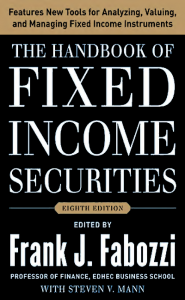
The Handbook of Fixed Income Securities by Frank Fabozzi
This updated and revised edition of editor Frank J. Fabozzi’s classic resource includes the most current information available about fixed income securities, how to evaluate this information and how it can be used to enhance returns. In particular, there is updated and expanded coverage on bond market indexes, the high-yield bond market, international bond markets and instruments, brady bonds, standard & poor’s sovereign ratings criteria, high-yield analysis of emerging markets debt, mortgages and overview of mortgage-backed securities, collateralized mortgage obligations, nonagency CMOs, commercial mortgage-backed securities, auto-loan-backed securities, home equity loans (HELs) and HEL-backed securities, manufactured housing-backed ABS, credit card ABS, evaluating amortizing ABS: a primer on static spread, global corporate bond portfolio management, and international bond investing and portfolio management.
PART ONE: BACKGROUND
Chapter 1. Overview of the Types and Features of Fixed Income Securities
Chapter 2. Risks Associated with Investing in Fixed Income Securities
Chapter 3. Bond Market Indexes
Chapter 4. Electronic Trading for Fixed Income Markets
Chapter 5. Macro-Economic Dynamics and the Corporate Bond Market
Chapter 6. Bond Pricing, Yield Measures, and Total Return
Chapter 7. Measuring Interest-Rate Risk
Chapter 8. The Structure of Interest Rates
PART TWO: GOVERNMENT SECURITIES AND CORPORATE DEBT OBLIGATIONS
Chapter 9. U.S. Treasury Securities
Chapter 10. Agency Debt Securities
Chapter 11. Municipal Bonds
Chapter 12. Corporate Bonds
Chapter 13. Leveraged Loans
Chapter 14. Convertible Securities and Their Investment Application
Chapter 15. Structured Notes and Credit-Linked Notes
Chapter 16. Private Money Market Instruments
Chapter 17. Floating-Rate Securities
Chapter 18. Inflation-Linked Bonds
Chapter 19. International Bond Markets and Instruments
Chapter 20. Emerging Markets Debt
Chapter 21. Fixed Income Exchange Traded Funds
Chapter 22. Covered Bonds
Chapter 23. Nonconvertible Preferred Stock
PART THREE: SECURITIZED PRODUCTS
Chapter 24. An Overview of Mortgages and the Mortgage Market
Chapter 25. Agency Mortgage-Backed Securities
Chapter 26. Agency Collateralized Mortgage Obligations
Chapter 27. The Effect ofAgency CMO PAC Bond Features on Performance
Chapter 28. Agency CMO Z-Bonds
Chapter 29. Support Bonds with Schedules in Agency CMO Deals
Chapter 30. Stripped Mortgage-Backed Securities
Chapter 31. Nonagency Residential Mortgage-Backed Securities
Chapter 32. Commercial Mortgage-Backed Securities
Chapter 33. Credit Card Asset-Backed Securities
Chapter 34. Securities Backed by Auto Loans and Leases, Equipment Loans and Leases, and Student Loans
Chapter 35. Collateralized Loan Obligations
PART FOUR: TERM STRUCTURE OF INTEREST RATES
Chapter 36. Overview of Forward Rate Analysis
Chapter 37. A Framework for Analyzing Yield-Curve Trades
Chapter 38. Empirical Yield-Curve Dynamics and Yield-Curve Exposure
Chapter 39. Term Structure Modeling with No-Arbitrage Interest Rate Models
PART FIVE: VALUATION MODELING
Chapter 40. Valuation of Bonds with Embedded Options
Chapter 41. Valuation of Agency Mortgage-Backed Securities
Chapter 42. Convertible Securities: Their Structures, Valuation, and Trading
PART SIX: CREDIT RISK
Chapter 43. Credit Analysis for Corporate Bonds
Chapter 44. The Credit Analysis of Municipal General Obligation and Revenue Bonds
Chapter 45. Credit-Risk Modeling
PART SEVEN: MULTIFACTOR RISK MODELS
Chapter 46. Introduction to Multifactor Risk Models in Fixed Income and Their Applications
Chapter 47. Analyzing Risk from Multifactor Fixed Income Models
Chapter 48. Hedging Interest-Rate Risk with Term-Structure Factor Models
PART EIGHT: BOND PORTFOLIO MANAGEMENT
Chapter 49. Introduction to Bond Portfolio Management
Chapter 50. Quantitative Management of Benchmarked Portfolios
Chapter 51. Global Credit Bond Portfolio Management
Chapter 52. Elements of Managing a High-Yield Bond Portfolio
Chapter 53. International Bond Portfolio Management
Chapter 54. Fixed Income Transition Management
Chapter 55. Managing the Spread Risk of Credit Portfolios Using the Duration Times Spread Measure
Chapter 56. Investing in Distressed Structured Credit Securities
Chapter 57. Hedge Fund Fixed Income Strategies
Chapter 58. Financing Positions in the Bond Market
PART NINE: DERIVATIVES
Chapter 59. Introduction to Interest-Rate Futures and Options Contracts
Chapter 60. Pricing Futures and Portfolio Applications
Chapter 61. Controlling Interest-Rate Risk with Futures and Options
Chapter 62. Interest-Rate Swaps and Swaptions
Chapter 63. The Valuation of Interest-Rate Swaps and Swaptions
Chapter 64. The Basics of Interest-Rate Options
Chapter 65. Interest-Rate Caps and Floors
Chapter 66. Credit Derivatives
Chapter 67. Credit Derivative Valuation and Risk
Chapter 68. Hedging Tail Risk
PART TEN: PERFORMANCE EVALUATION AND RETURN ATTRIBUTION ANALYSIS
Chapter 69. Principles of Performance Attribution
Chapter 70. Performance Attribution for Portfolios of Fixed Income Securities
Chapter 71. Advanced Topics in Performance Attribution
Download Free PDF Book : The Handbook of Fixed Income Securities
PART 1: Wealth in a Wheelchair…“Get Rich Slow” is Get Rich Old
CHAPTER 1. The Great Deception
CHAPTER 2. How I Screwed “Get Rich Slow”
PART 2: Wealth is Not a Road, But a Road Trip
CHAPTER 3. The Road Trip to Wealth
CHAPTER 4. The Roadmaps to Wealth
PART 3: The Road Most Traveled: The Sidewalk
CHAPTER 5. The Sidewalk Roadmap
CHAPTER 6. Has Your Wealth Been Toxified?
CHAPTER 7. Misuse Money and Money Will Misuse You
CHAPTER 8. Lucky Bastards Play the Game!
CHAPTER 9. Wealth Demands Accountability
PART 4: Mediocrity: The Slowlane Roadmap
CHAPTER 10. The Lie You’ve Been Sold: The Slowlane
CHAPTER 11. The Criminal Trade: Your Job
CHAPTER 12. The Slowlane: Why You Aren’t Rich
CHAPTER 13. The Futile Fight: Education
CHAPTER 14. The Hypocrisy of the Gurus
CHAPTER 15. Slowlane Victory … A Gamble of Hope
PART 5: Wealth: The Fastlane Roadmap
CHAPTER 16. Wealth’s Shortcut: The Fastlane
CHAPTER 17. Switch Teams and Playbooks
CHAPTER 18. How the Rich Really Get Rich!
CHAPTER 19. Divorce Wealth from Time
CHAPTER 20. Recruit Your Army of Freedom Fighters
CHAPTER 21. The Real Law of Wealth
PART 6: Your Vehicle to Wealth: YOU
CHAPTER 22. Own Yourself First
CHAPTER 23. Life’s Steering Wheel
CHAPTER 24. Wipe Your Windshield Your Clean
CHAPTER 25. Deodorize Flatulent Headwinds
CHAPTER 26. Your Primordial Fuel: Time
CHAPTER 27. Change That Dirty, Stale Oil
CHAPTER 28. Hit The Redline
PART 7: The Roads to Wealth
CHAPTER 29. The Right Road Routes to Wealth
CHAPTER 30. The Commandment of Need
CHAPTER 31. The Commandment of Entry
CHAPTER 32. The Commandment of Control
CHAPTER 33. The Commandment of Scale
CHAPTER 34. The Commandment of Time
CHAPTER 35. Rapid Wealth: The Interstates
CHAPTER 36. Find Your Open Road
CHAPTER 37. Give Your Road a Destination!
PART 8: Your Speed: Accelerate Wealth
CHAPTER 38. The Speed of Success
CHAPTER 39. Burn The Business Plan, Ignite Execution!
CHAPTER 40. Pedestrians Will Make You Rich!
CHAPTER 41. Throw Hijackers to the Curb!
CHAPTER 42. Be Someone’s Savior
CHAPTER 43. Build Brands, Not Businesses
CHAPTER 44. Choose Monogamy Over Polygamy
CHAPTER 45. Put It Together: Supercharge Your Wealth Plan Appendices
How many copies has the Millionaire Fastlane sold?
The international bestseller MJ DeMarca has sold more than 350,000 copies worldwide and has been translated into more than 15 languages - an enterprising bible that transforms business, personal finance, lifestyle and success! THE MILLIONAIRE FASTLANE: NOW AN INTERNATIONAL BEST-SELLER!
How many pages is millionaire fast lane?
Pages : 338
Who wrote the millionaire fast lane?
M. J. DeMarco
Download Free PDF Book : The Millionaire Fastlane by M. J. Demarco
The millionaire fastlane: crack the code to wealth and live rich for a lifetime!
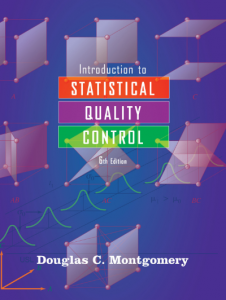
Introduction to Statistical Quality Control by Montgomery
This book Introduction to Statistical Quality Control is about the use of modern statistical methods for quality control and improvement.
It provides comprehensive coverage of the subject from basic principles to state-of-the-art concepts and applications.
The objective is to give the reader a sound understanding of the principles and the basis for applying them in a variety of situations.
Although statistical techniques are emphasized throughout, the book has a strong engineering and management orientation.
Extensive knowledge of statistics is not a prerequisite for using this book. Readers whose background includes a basic course in statistical methods will find much of the material in this book easily accessible.
The book is an outgrowth of more than 35 years of teaching, research, and consulting in the application of statistical methods for industrial problems.
It is designed as a textbook for students enrolled in colleges and universities, who are studying engineering, statistics, management, and related fields and are taking a first course in statistical quality control.
The basic quality-control course is often taught at the junior or senior level.
I have also used the text materials extensively in programs for professional practitioners, including quality
and reliability engineers, manufacturing and development engineers, product designers, managers, procurement specialists,
marketing personnel, technicians and laboratory analysts, inspectors, and operators. Many professionals have also used the material for self-study.
Download Free PDF : Introduction to Statistical Quality Control
There are many standards, methods and perhaps most confusing, but most importantly of all acronyms in use in the field of quality management, and especially so in the field of technology-based products. From the seemingly simple concepts of ISO 9000 (and the military MIL standards from which that grew) to statistical and analytical methods like Statistical Process Control (SPC) the range of complexity and compliance is staggering. What the average quality engineer or manager needs is a simple guide to what these are, how they relate to one another and most critically how to take advantage of and implement the benefits of each. This book provides that guidance.
Contents of Quality Management for the Technology Sector
Chapter 1. Managing for Quality in the High Tech Environment.
Chapter 2. The Continuous Improvement Concept.
Chapter 3. Finding Your Customers.
Chapter 4. Quality Measurement Systems.
Chapter 5. Problem Solving.
Chapter 6. Systems Failure Analysis.
Chapter 7. Employee Involvement and Empowerment.
Chapter 8. Corrective Action Boards and Focus Teams.
Chapter 9. Statistics for Nonstatisticians.
Chapter 10. Statistical Process Control.
Chapter 11. ANOVA, Taguchi, and Other Design of Experiments Techniques.
Chapter 12. Quality Function Deployment.
Chapter 13. Inventory Management.
Chapter 14. Value Improvement.
Chapter 15. Supplier Teaming and Procurement Quality Assurance.
Chapter 16. D 1-9000, ISO 9000, MIL-Q-9858, and MIL-STD-1520.
Chapter 17. On-Time Delivery Performance Improvement.
Quality Management for the Technology Sector PDF
Author(s): Joseph Berk Joe Berk is a consultant working in the field of quality management and especially in the technology military and munitions sectors., Susan Berk
Publisher: Butterworth-Heinemann, Year: 2000
ISBN: 0750673168,9780750673167,9780080515519
Download Quality Management for the Technology Sector
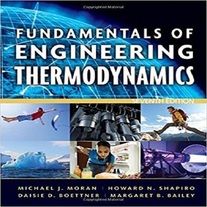
![[PDF] Fundamentals of engineering thermodynamics 9th edition](https://ebookfree.net/wp-content/uploads/2020/03/Fundamentals-of-engineering-thermodynamics-5th-edition-1.jpg "[PDF] Fundamentals of engineering thermodynamics 9th edition")

![[PDF] Principles of Thermodynamics by Jean and Brechet](https://ebookfree.net/wp-content/uploads/2020/02/Principles-of-Thermodynamics-by-Jean-and-Brechet-1.png "[PDF] Principles of Thermodynamics by Jean and Brechet")

![[PDF] How to Write a CV That Really Works](https://ebookfree.net/wp-content/uploads/2019/12/How-to-Write-CV-That-Really-Works-by-Paul-1.png "[PDF] How to Write a CV That Really Works")
![[PDF] Resisting Happiness Study Guide](https://ebookfree.net/wp-content/uploads/2019/12/Resisting-Happiness-Study-Guide-by-Matthew-1.png "[PDF] Resisting Happiness Study Guide")

![[PDF] SketchUp for Interior Design 3D Visualizing Designing and Space Planning](https://ebookfree.net/wp-content/uploads/2019/12/SketchUp-for-Interior-Design-1.png "[PDF] SketchUp for Interior Design 3D Visualizing Designing and Space Planning")
![[PDF] The Materials Science of Thin Films](https://ebookfree.net/wp-content/uploads/2019/12/The-Materials-Science-of-Thin-Films-by-Milton-1.png "[PDF] The Materials Science of Thin Films")

![[PDF] The Handbook of Fixed Income Securities by Frank Fabozzi](https://ebookfree.net/wp-content/uploads/2019/12/Handbook-of-Fixed-Income-Securities-1.png "[PDF] The Handbook of Fixed Income Securities by Frank Fabozzi")
![[PDF] The Millionaire Fastlane by M. J. Demarco](https://ebookfree.net/wp-content/uploads/2019/12/Millionaire-Fastlane-Crack-Code-to-Wealth-and-Live-Rich-For-Lifetime-1.png "[PDF] The Millionaire Fastlane by M. J. Demarco")

![[PDF] Introduction to Statistical Quality Control](https://ebookfree.net/wp-content/uploads/2019/12/Introduction-to-Statistical-Quality-Control-by-Montgomery-1.png "[PDF] Introduction to Statistical Quality Control")